I post about my relationship with the Triune God as He has revealed Himself in The Holy Scriptures, the Bible.
Escribo sobre lo que estoy aprendiendo de mi relación con mi Padre Dios, Dios Trino tal como se ha revelado en las Sagradas Escrituras, la Biblia.
Follower of Jesus. Husband. Father. Teacher. Pastor. Salvadorean by birth, Hispanic-American. Amateur Runner. Bibliophile.
Seguidor de Jesús, esposo, papá, pastor, nacido en el Salvador, hispano-americano, corredor amateur y bibliófila.
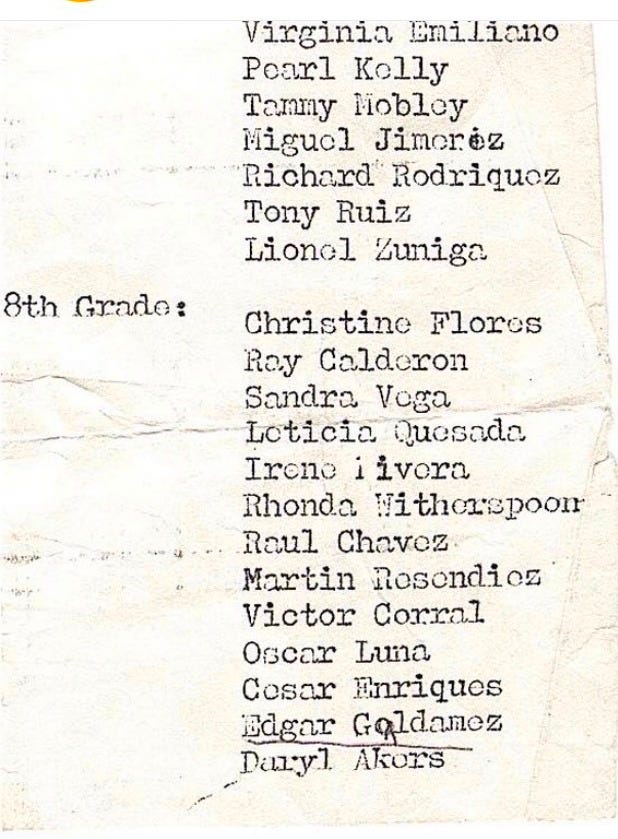
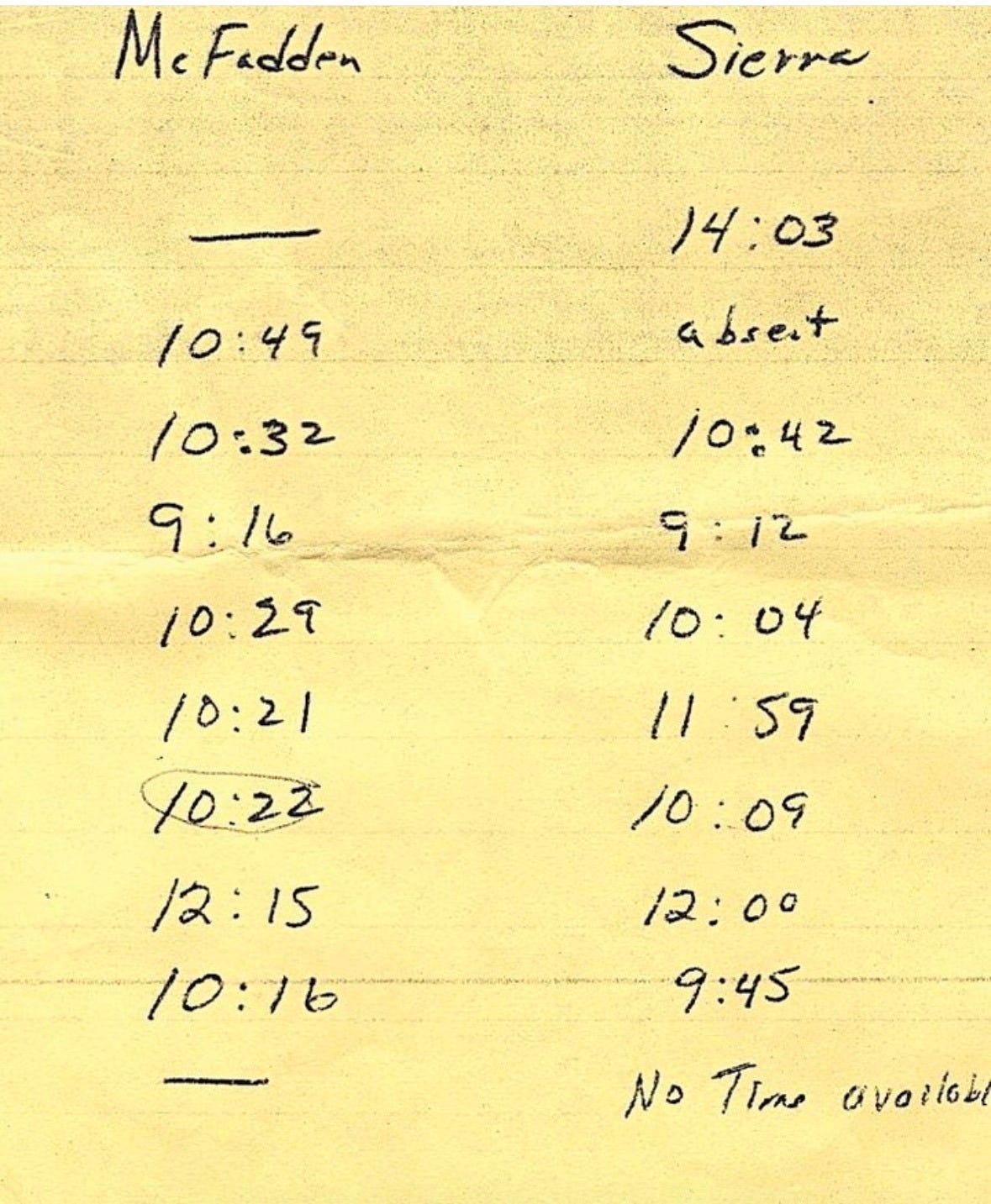
Below is my roster for 8th grade cross-country. I am not sure why I joined it. I wasn’t fast at all even though I was a skinny kid (I am not anymore) nor was I competitive. When we ran, I was almost always one of the last ones. I remember the short blonde 6th grader who was fast. He flew at the start line and never saw him again. Ray Calderón was the fastest 8th grader in our team. He looked more mature than others. I ran one season. Not too long after, our Middle School had assembly for parents and students and I missed it. Lo and behold I received a trophy for “Most Valuable Player”. No one told me why but I think I know. I always showed up and did what I had to do. I was reliable and consistent. I didn’t become a runner immediately after this but I always did throughout the years, though not consistently.
About 17 years ago I started running six days a week for close to three miles (I share more about this here and here). Sunshine, rain or snow (very few times) I seldom miss a day. Though I am not competitive, I have ran five marathons and one half marathon. My pace had been slow but consistently the same. At this pace even seventy year olds have passed me. But once again, I don’t run to compete. I run to finish. I do also run for my health and also because I enjoy the movement of the outdoors. For me what is truly important is discipline and consistency (showing up). Reflecting back at my life these two qualities have been almost innate and make me who I am today. They don’t neccessarily make me better or more successful than anyone but they do help me accomplish my goals, both short-term and long-term. In my dealings with people I find that when these are absent, it doesn’t matter what they set to accomplish, they set themselves to not finish.
I enjoy the Rocky movies, they are inspiring because Rocky never gives up. He keeps going. In one movie, his opponent keeps punching him and he keeps taking them. Rocky’s answer is “he’s getting tired”. Rocky has realized something important, you got to keep doing what you need to be doing. That takes discipline and consistency. The old proverb "slow and steady wins the race" is applicable here. Discipline and consistency will get you to your destination.
Working out our salvation takes effort from us his Church. God works in us, but He also do it with our efforts. I can’t quantify who does what, but I know that what Paul said is true,
What does it mean to work out our salvation?
God has begun the work of our perfection (sanctification), the process of our complete salvation (glorification) that includes not only being like Christ in our character but ultimately includes the transformation of our bodies. Our complete salvation will come when we are with Christ (Phil. 1:23) or when Christ comes for us (Phil. 2:16) and transforms us (Phil. 3:20-21; Rom. 13:11-12; ).
Although God has begun it in our lives, it is not an act without our participation. It is not for us to stand as a church doing nothing. We are to live as citizens of heaven (Phil. 3:20) This is the theme Paul develops in this text.
There are three elements that must be part of our spiritual work in order to grow in our salvation, our process of perfection, sanctification until we become like Christ. These are not elements that are done once but are progressive in nature that are part of our daily lives.
I enjoy history and a byproduct of this is taking pictures of vintage photos that I find at antique stores. I often say to myself and others, “they once had a life like ours, now all that is left are pictures that been given or tossed away and find themselves in an antique store.” I ask myself questions wanting to learn more about their story. We don’t realize but most of us “non-famous” people, unless we have some sort of paper or digital trail, we will all be forgotten in time. Learning about people living in earlier centuries has always fascinated me and I hope that through this I can in some way bring them back to our memory.
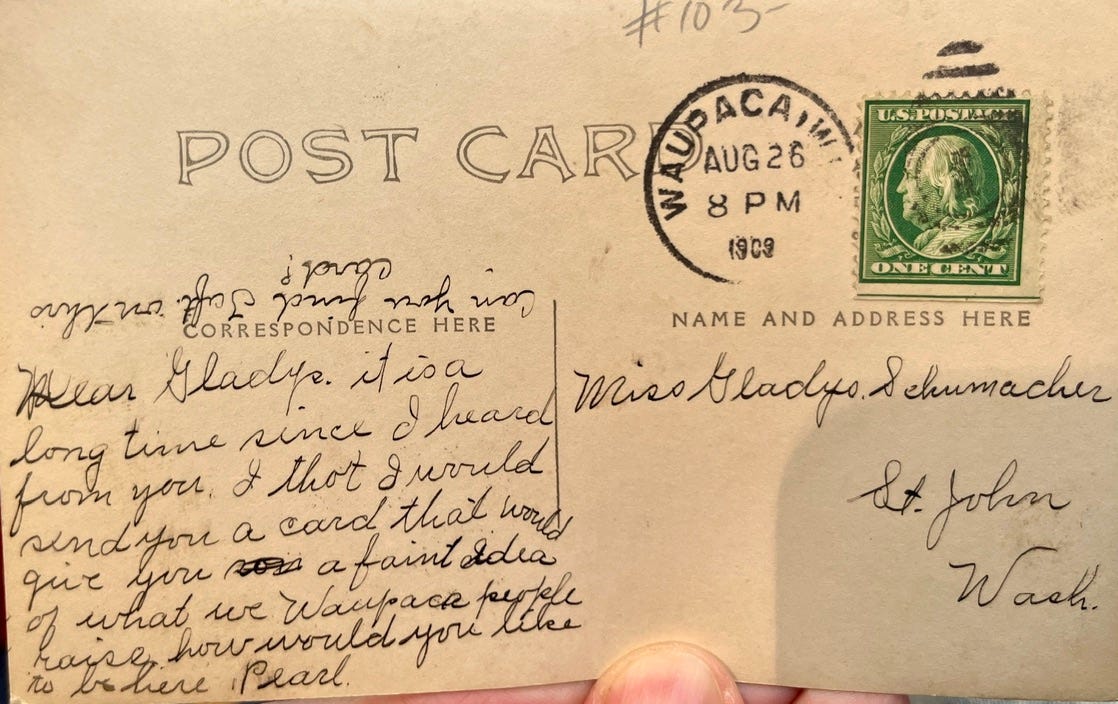
Not too long ago I came across 4x5 postcards[1] popular during this time sent to “Miss Gladys Schumacher” from 1908 to 1914. What first attracted me where the different pictures on the card that showed places in Washington. As I continued to look at them, I found myself immersed in their time in history. From the number of cards, I could see that Miss Gladys was very much appreciated and loved. She had friends who often wrote to her and several of them encouraged her to write more often.
Doing a bit of research, I found that Gladys Schumacher Hamilton was born in Saint John, Whitman County, Washington on October 6, 1892, and died on January 15, 1985, at the age of 92 and was buried in King County Washington[2]. The area she grew in was no doubt a small rural town. St. John was founded in the 1880’s and incorporated in 1904. It is located in the Palouse region of Eastern Washington. The current population then was about 499 and it hasn’t changed much since then. Current population is 558.[3]
She lived a long life. Her parents were Anthony Schumacher, her stepfather and Myrtle B. Wilson. She had a stepbrother named Paul Anthony Schumacher. She apparently trained to be a teacher at State Normal School at Cheney (now Eastern Washington University) and graduated from school in 1911. She attended Iowa Teachers College in Iowa and taught Mathematics at Marshalltown High School in Iowa in 1916[4]. Not too long after she moved back to Washington and had a teaching job in Whitman County schools. Gladys married Francis Winfield Cobb on 11 June 1924, in Whitman, Washington. Francis had two children of his own and both had two more children of their own, Marjorie L. Cobb born in 1925 and Frances G. Cobb born in 1927. Interestingly, their two children were not mentioned in their family tree for some reason.
I did a lot more searching, but I did not find much more regarding Gladys Schumacher. I only wish a picture had been left behind. From her cards though, I know she was loved by many. She lived a full life. I keep three of her postcards in my home office as a reminder that she was once among us and is still here in some way through them. As the old monks used to say, “memento mori”. We all need to live with the realization that one day we’ll be gone and hopefully live in the memories of others.
Enjoy the following postcards.
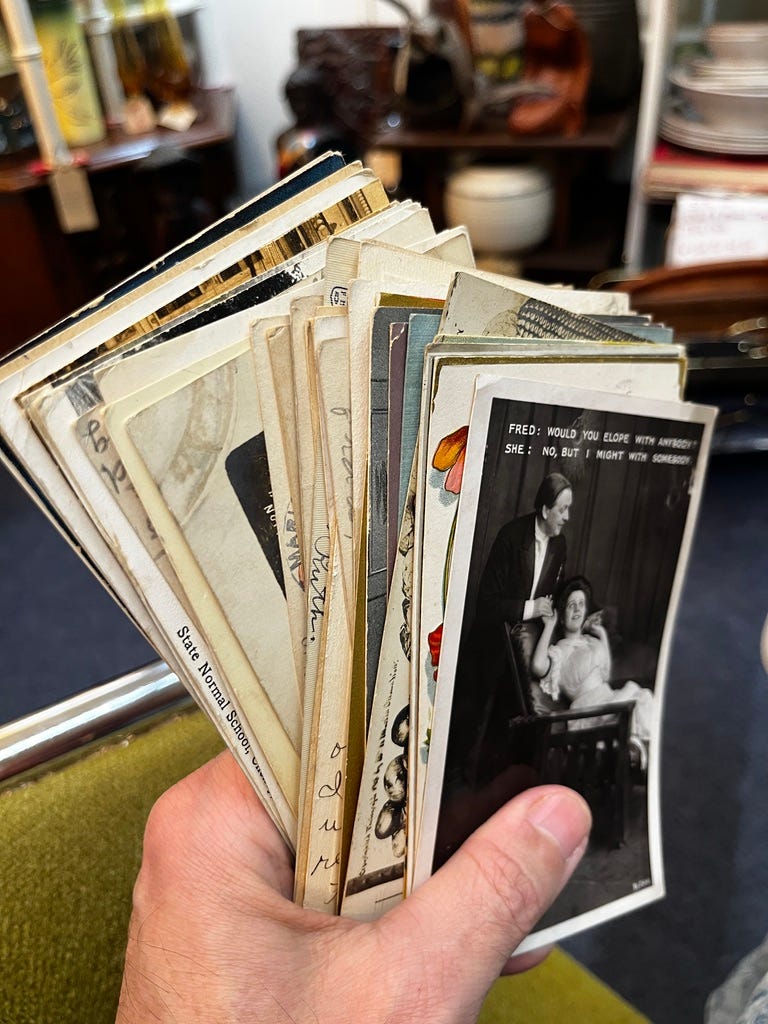
The postcard boom between 1905 and 1915 made it easy to communicate. Here is a stack of old post cards that I found and read at an antique store (I couldn’t buy all of them)
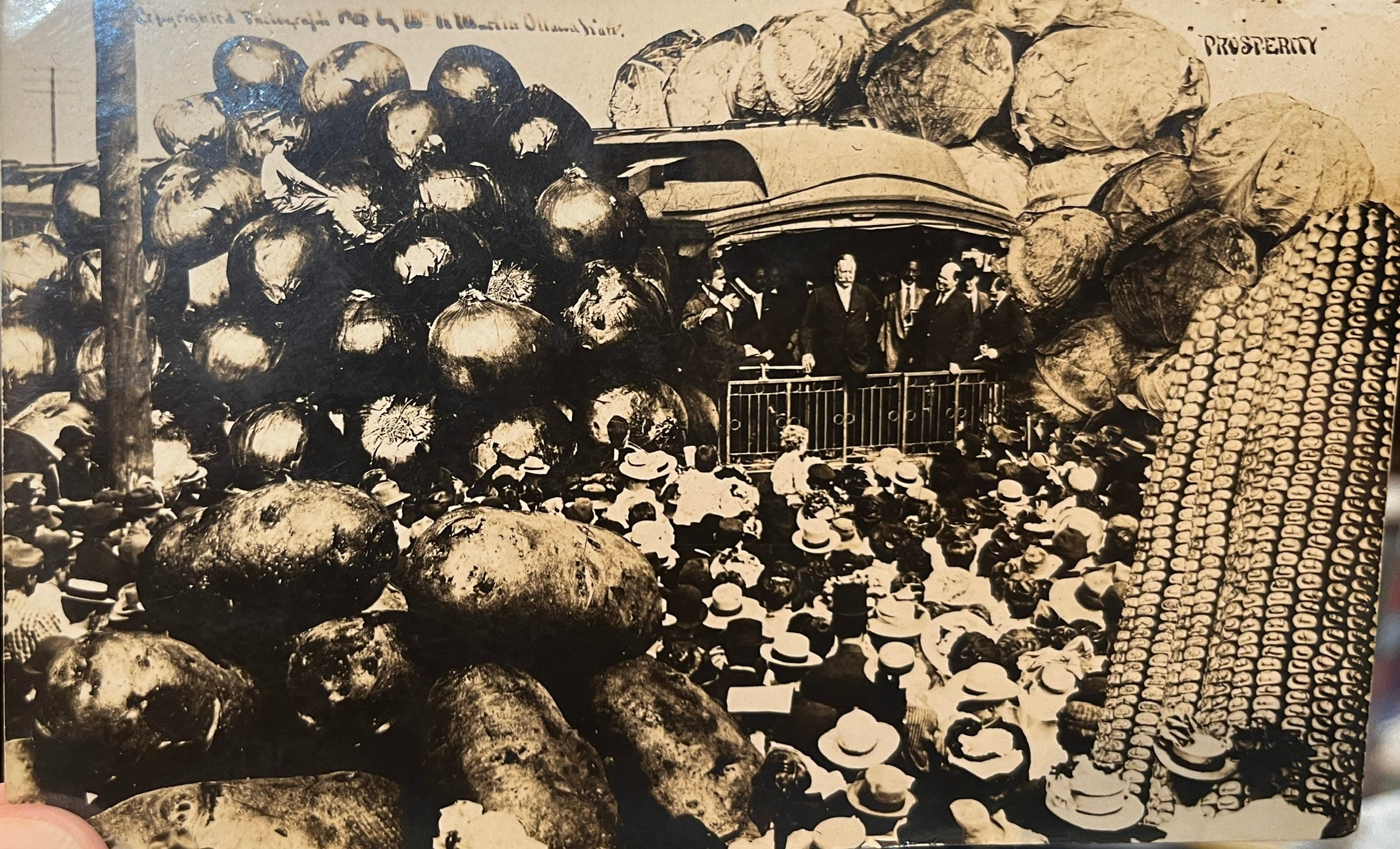
This post card from 1909 features president Taft. This card is considered a “Tall Tale” because it exaggerates the size of the produce.
A card (1909) from Pearl to Gladys about the “Waupaca people” and the crops they raise (see front of Postcard). The upside-down question asks, “Can you find Taft on this card?”
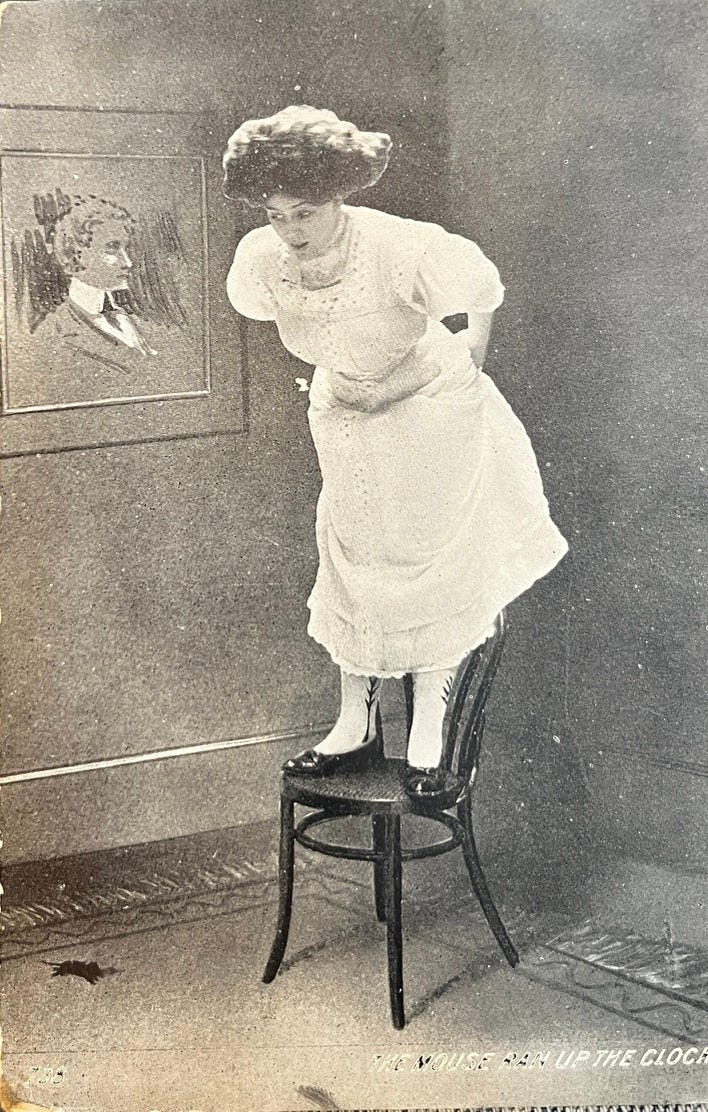
The image above is titled “The Mouse Run Up the Clock” by famous photographer Rudolf Eickemeyer Jr.
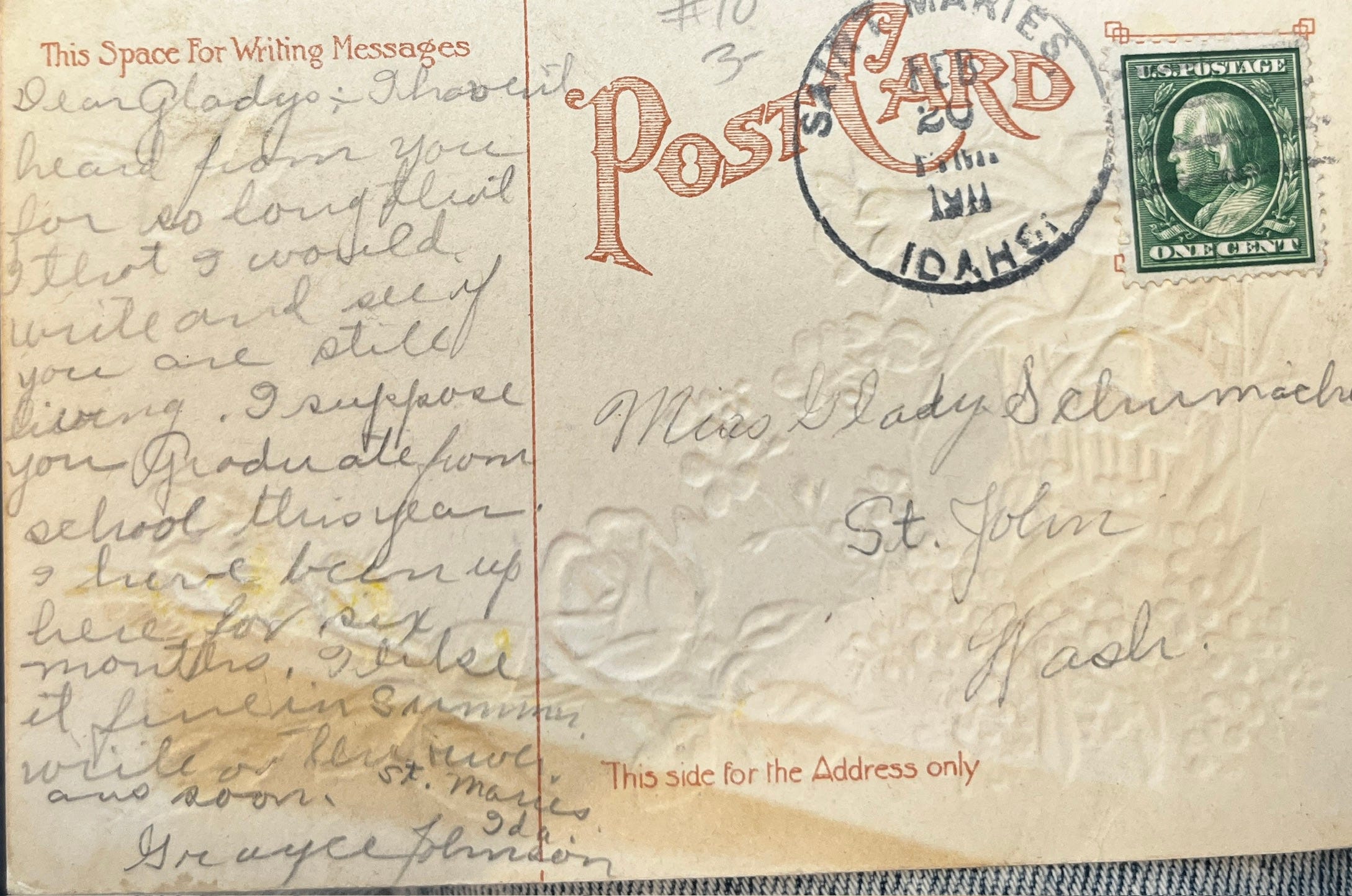
This card was from Grayce Johnson asking Gladys if she was still alive. He mentions she would be graduating that year (1911). The image is making a point about time that has passed and she has not written.
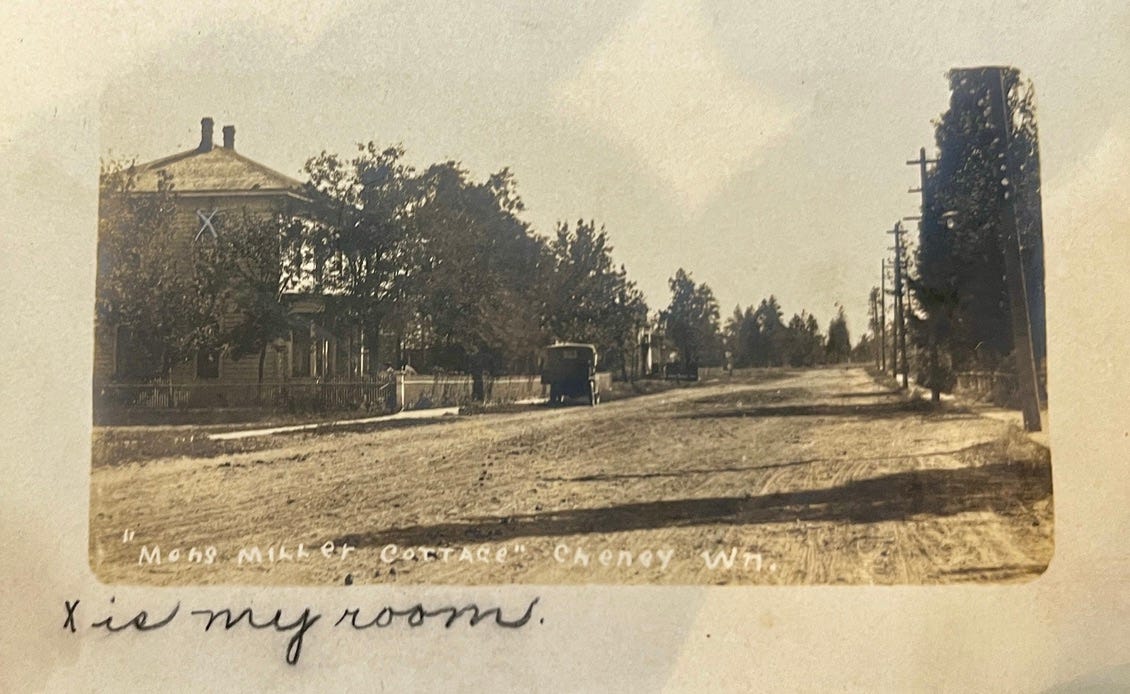
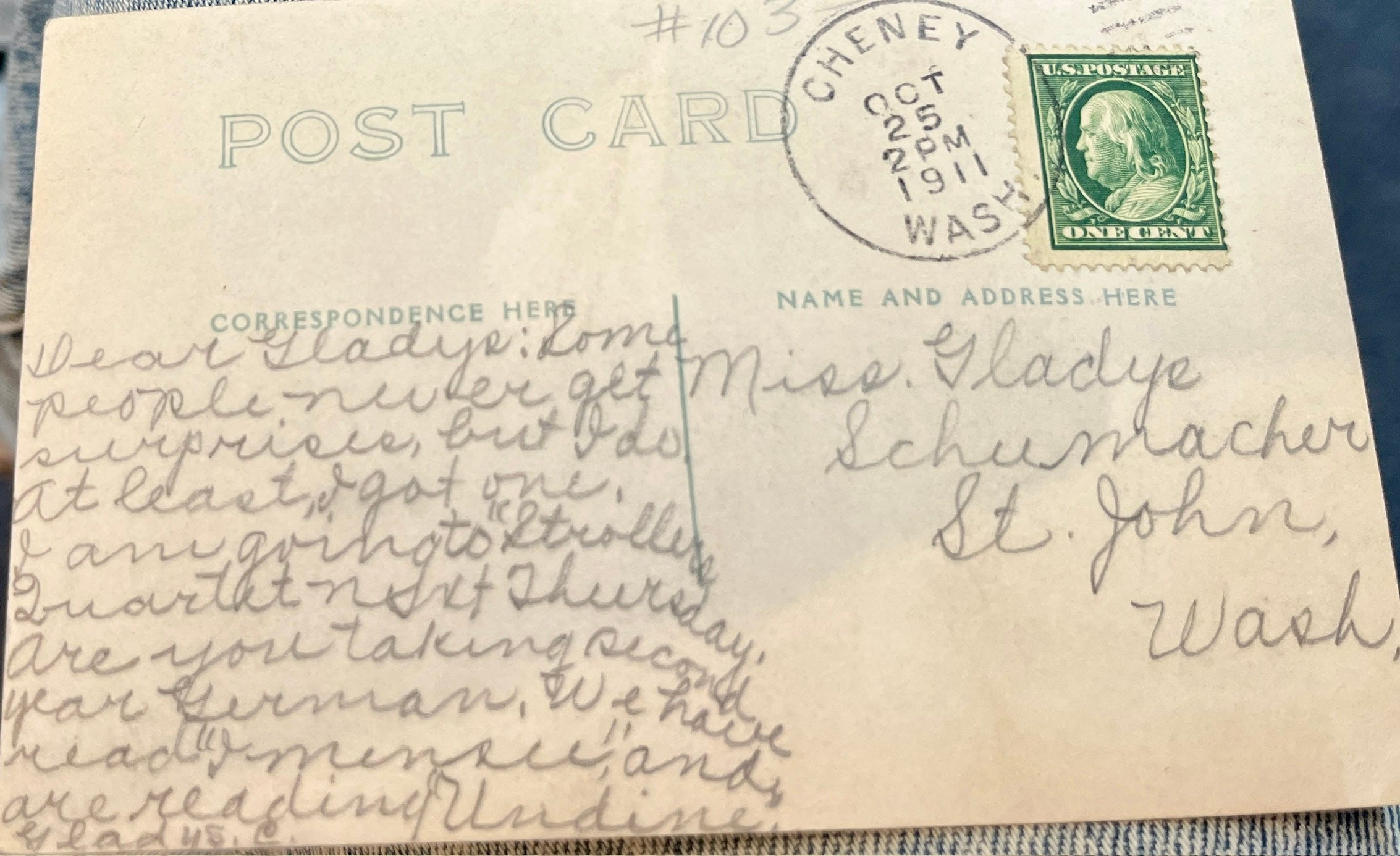
This postcard was probably a private residence in “Mons Miller Cottage” in Cheney Washington October 25, 1911. The “x” is where Gladys who wrote the card lived.
Here is the text of the card: “Dear Gladys: Some people never get surprises, but I do. At least, I got one. I am going to trolley to Spokane next Thursday. Are you taking second year German. We have read “Munsee”, and are reading Undine. Gladys. C.”
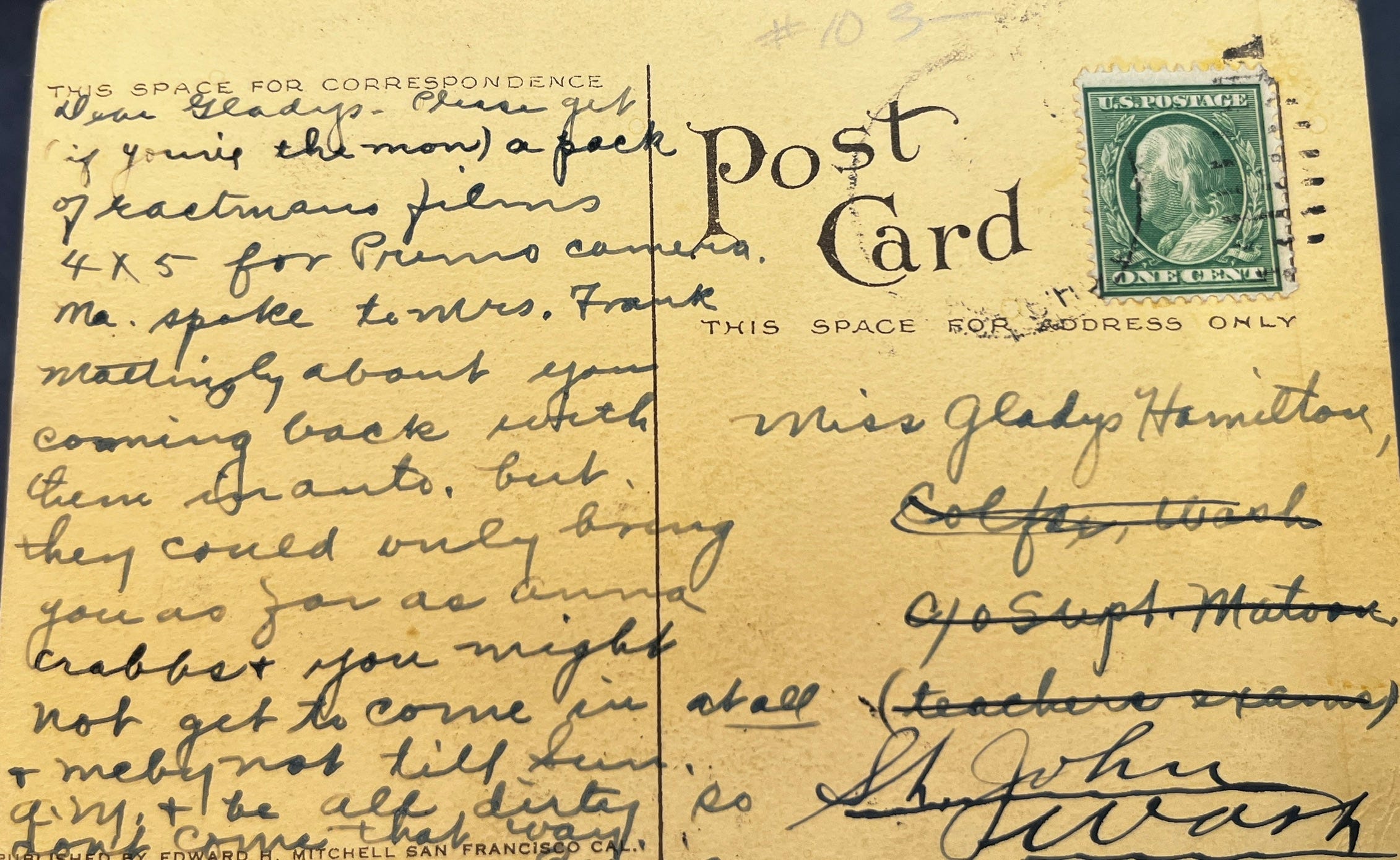
This postcard to Gladys has a different address, St. John Washington. The best transcript reads: “Dear Gladys - Please get (if ? the mon) a pack of Eastman films 4 x 5 for Premo camera. Ma. spoke to Mrs. Frank Matlingly about you coming back with them in auto but they could only bring you as far as Anna crabbs & you might not get to come in at all & maybe not till Sunday am. & be all dirty so don’t come that way.”
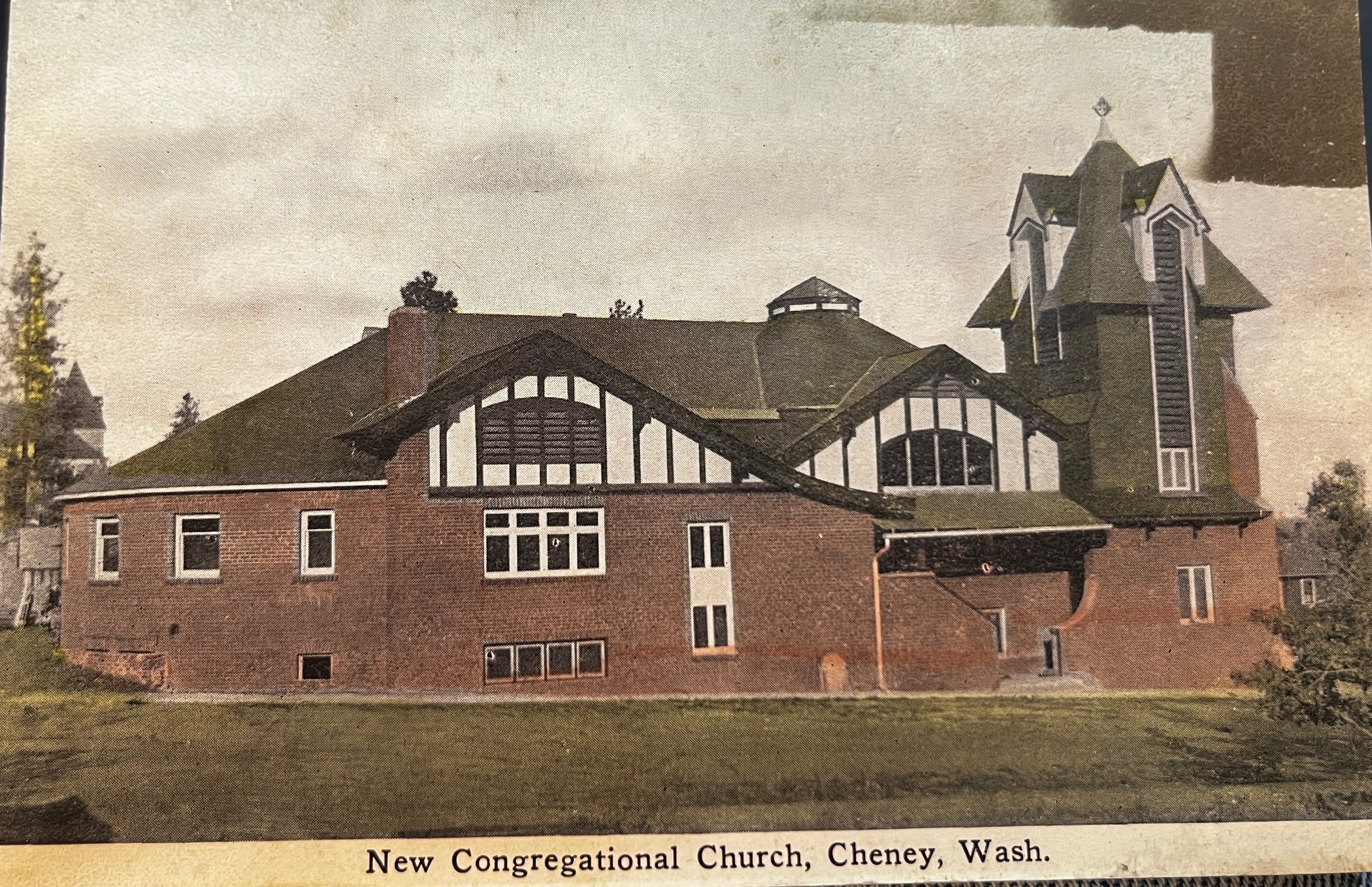
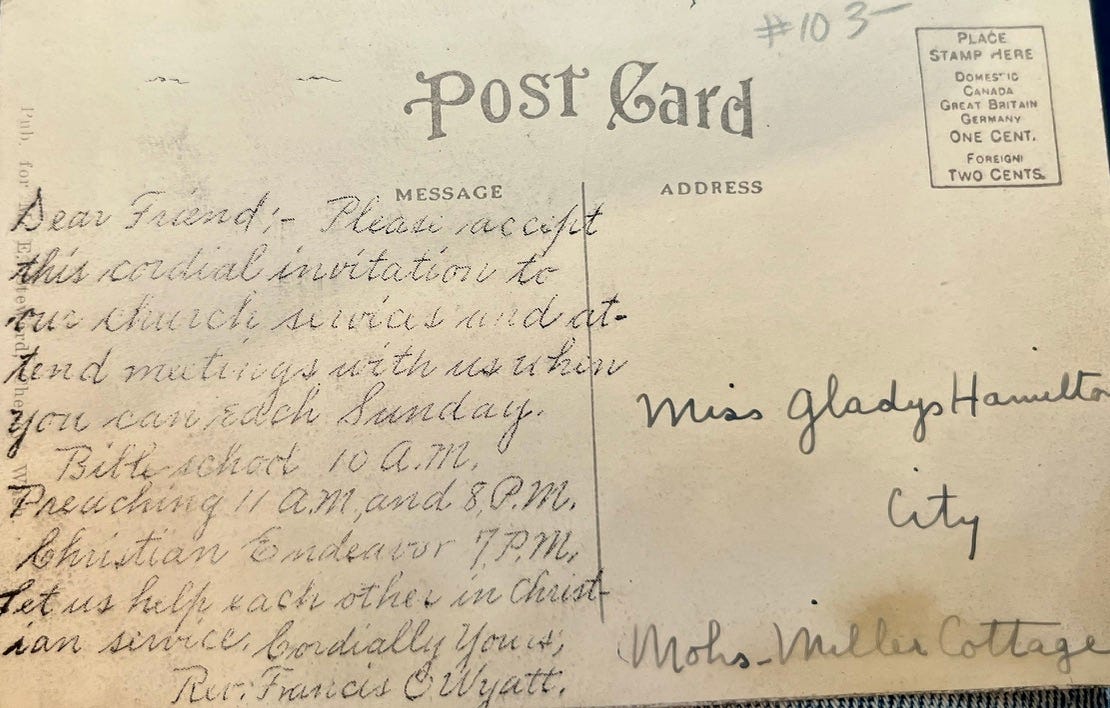
This was a post card inviting Gladys to church from the Rev. Francis E. Wyatt from New Congregational Church in Cheney Washigton. The church still exists today.
Hannah is one example of how God answers prayer. Thank God for women like Hannah. She lived in a difficult time. It was the time connected with the book of Judges. Everyone did what seemed right to him (Judges 17:6; 18:1; 21:25). It was a time of infidelity to God on the part of his people. God had raised up judges to lead God's people, but even so, His people continued to go astray. There had been no prophet since Moses, and the word of God was in short supply. The priests lived in a ruthless manner (1 Samuel 3:1). Eli's sons, Hophni and Phinehas, were wicked, and Eli did nothing to prevent them.
Hannah's prayer would be part of the solution to the spiritual condition of God's people.
Today we will learn from a man, a Christian named Barnabas. His life teaches us what are the values of the kingdom by which we must live the Christian life. These values are lived, they are expressed in the community of believers, in the Church of Christ. In Acts 4 we find the description of Barnabas and the context is the Church living according to Christ's design, a community dedicated to living and impacting the values of His kingdom.
After the great event of defying the prophets of the god Baal Elijah in 1 Kings 18, he experiences a crisis. Despite being a man of God with so much power, he experienced fear, so much discouragement that it lead him to ask God to take his life. Why did this happen? First of all because Elijah was human like us.The Bible says of Elijah:
“Elijah was a man with a nature like ours, and he prayed fervently that it might not rain, and for three years and six months it did not rain on the earth. 18 Then he prayed again, and heaven gave rain, and the earth bore its fruit.” - James 5:17-18
All of us relate to Elijah. We will all reach some moment of fear and discouragement. We all need God to intervene in those moments. Elijah teaches us how God comforts and encourages us in times of crisis.
Psalm 23 gives us a glimpse of what it means to be a guest of honor to our Great Shepherd. Even though the metaphor of the shepherd seems to move into more human form, there is no reason to believe that we are not the sheep anymore. He as the Shepherd gives us great honor in our relationship with him.
If you are a Christian, there are good news. To God you are His special guest. He invites you to fellowship with him. He gives you the best reception. Someday not too far away you will be in his mansion. You will be their special guest. Forever.
The Good Shepherd restores us and guides us in the path of righteousness. As we live our life with the Lord as our Shepherd, there will be times when we need to him to restore or renew our life. Jesus said his sheep hear his voice and follow him. But often we think we know better.Our Good Shepherd is with us ALL the time. He never leaves us. He never forsakes us.
I was brought to this country when I was a few months from my eleventh birthday. My mom, a single mother of nine, made the trek with three other of my siblings. After spending a year in Los Angeles, we moved to Orange County. It was there that as a teen of only thirteen years we visited a Spanish speaking Baptist church. I had never attended a Christian church. It was not long after that I joined the youth group which Mark was leading. He was a tall, over six feet tall, White man who was well-educated. He had been in the Navy and was hoping to one day become a missionary. His father-in-law was the pastor of the church and had asked him to help him lead the youth. It was here where my friendship with Mark began. At the outset, I was impressed by him. I grew up with no male figures. My other mentor Jimmy left the church not too long after there to join the Army, thus Mark took his place.
Time has passed and my family and we’ve reconnected with Mariann, Mark’s wife and their oldest daughter. Mark’s oldest helped us find and buy a home where we live now. I wish Mark was here. I am sad that his family is estranged for reasons I don’t know. I know Mark would not approve of this. He would be devastated and would everything possible to make it right. This is not what he wanted for them. Nevertheless, I can’t do anything but pray.Mark was just starting his family and had two of his girls I think and thereafter had a boy and a girl. His wife had a very close relationship with him and was always with him. I sort of became part of the family. Even though our youth was in English, Mark was learning Spanish and often communicated with members of the church even though it was hard for him.
Our youth group at this point was made up of teens of about the same age (it changed later on to be more a young adult group mixed with younger ones). My sisters and others were part of them as well. Mark organized the youth, taught classes, created events and quickly got us to start memorizing Scripture, something he learned from The Navigators while in the Navy. Bunco nights at his house, Sunday night outings to Bob’s Big Boy (I loved their hot fudge cakes) or Norms became the norm. I remember that he would often have a pen in his shirt pocket (which I took on as well) and would draw or illustrate things on napkins as he was sharing with me or others. He would take me home but never without having a chat with me. I soaked everything in. He taught me how to play the guitar and became involved in playing in worship. I remember how I struggled to keep up with him. But I learned. Mark also taught me about being well-organized and also instilled in me the passion of reading, especially biographies. I would often borrow books from him to read them and returned them. My first Mac, a Mac SE was given to me by him and since then, they have been my favorite computers. He loved learning and this was fostered in me as well. Many of the values I now have were in large due to his mentorship.
I got to know Mark and his family. He was a strong man of convictions and had no fear in expressing them to anyone whether this meant liking him or not. He also a family man. There was no doubt he loved his wife and his children and strived to provide for them as best as he could and instruct them as well. He was involved in their lives as they were growing, I observed when he gave them words of correction and admonition. I knew he loved them and would give everything for them. Mark and his family left the church a few years after. I don’t know the exact reasons, but I know that part of it, was that there were differences between him and his father-in-law.
After this we remained in touch. The next chapter where he was involved in my life was when I began to court my wife in March of 1990. This was a difficult time for me and her since we were not regarded as a “compatible” couple even though both of us shared the same faith. We had significant differences, both age and stage of life. This created a huge uproar in my family and some people in the church. Accusations, rude comments in private and public were launched at us to stop us. It was a horrible time, but we survived. It was during this time that I went to see Mark with my bride to be. Because he had played such an important role in my life, I felt he needed to know. I don’t remember our conversation, but I wrote a few sentences in my journal May 24, 1990:
“I talked to Mark yesterday concerning my relationship…He supports our relationship. That’s an encouragement! He prayed for us…That really touches me.”
He also told me that I had to get an engagement ring for her, which I did soon thereafter. Mark and his wife Mariann were part of our wedding and gave us a Bible. My wife used this Bible for a while and is now stored away.
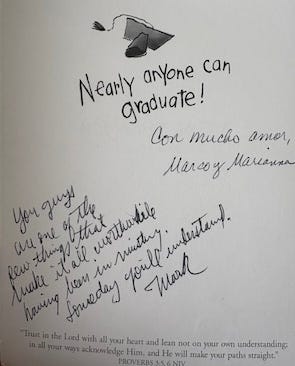
When I graduated from Seminary, Mark was there as well. He gave me a card and wrote a few sentences that are meaningful to me today as I reread them recently: “You guys are one of the few things that make it all worthwhile having been in ministry. Someday you’ll understand.”
I knew what he meant and he was right. Not too long after this I began church planting and became part of a church. Mark became part of the admin staff sometime later. We had brief interactions at times to stay in touch.
There were other social interactions. He and his family came to our kid’s birthday parties. I was recently going through old photos, and it was fun to see his children been part of it. His youngest daughter connected really well with our oldest daughter. I have a picture of both of them hugging. When our son was born and was presented at our church, Mark and his wife were there. I could always trust Mark to be at important events of our lives. For this, I am very grateful.
Time passed and we didn’t see each other often. He moved to New Mexico and then to Oregon. My last interaction with Mark came in 1988 through Facebook. He had recently come back from teaching English in S. Korea. I remember seeing all the pictures of him and his wife in S. Korea. I contacted him and on May 14, 2008, and wrote, “It’s about time you answered.” I don’t have the words he wrote to me since I deleted the Facebook account and only have the archive records. On December 29, 2008, I found out Mark had gone to Heaven after having a hard attack. I wrote this in his youngest daughter’s timeline:
“I have been thinking about him the past two days. I was thinking back the influence he had on me and I was remembering all the good times we had with him when we were young. I am very saddened by the news.”
I also wrote in his timeline on December 29:
“Mark...even to your last days you gave me words of guidance. These last few days I have been telling my son and my wife how you influenced me in my early days as a Christian over 20 years ago. Though imperfect as we all are, God used you to help me become what I am today. Thank you! I only regret not having seen you in person, but I know I will when my time comes. Love, Edgar”
This was my friend, my mentor, my older brother, Mark.
My wife, my son and I went to his funeral in January of 2009.
The other day when I was running is when I thought of writing this longer post. Originally, I was just going to post the card contents but decided to this instead. He deserves this. As I was running, I was thinking of Heaven where Mark is now. I was wondering if God allows his saints there to peek into our lives and even hear us. I am not sure we have a firm answer. But I prayed to God and asked if he could relay my message to Mark, “Thank you Mark for all you did for me!” I am not sure if he got it, but I know that one day we’ll connect again and catch up. Until then, Mark!
Words Mark wrote for my Seminary graduation.
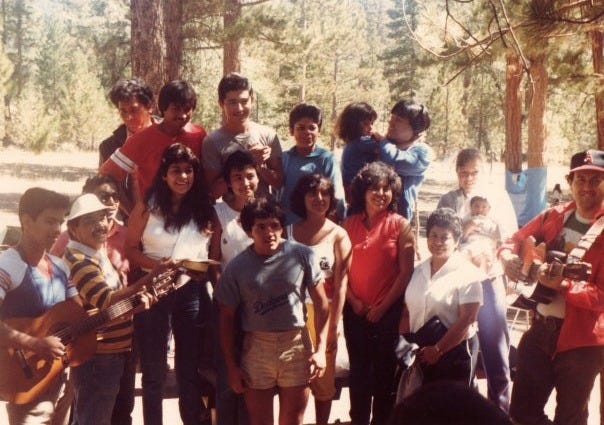
At a church camp with some of the youth. Mark on the far right. I am the third on the top with a grey shirt.
Many people today say they believe in God. They believe in God in a very superficial way because it does not affect their daily life. This may be because they do not know how to have an intimate relationship with God. They can’t say, “The Lord is my Shepherd.” This is what we want to explore in this Psalm. What does it mean to have the Lord as our Shepherd?